
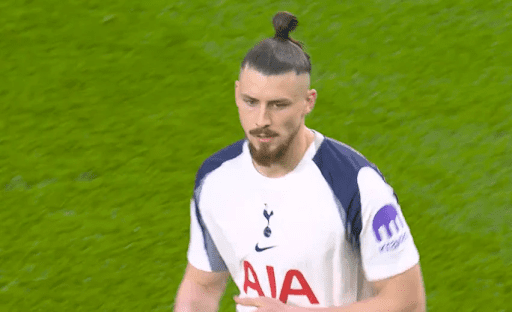
Radu Dragusin’s situation at Tottenham has quietly but significantly changed. What initially looked like a season of adaptation and rotation is now turning into something far more meaningful. The decision taken by Thomas Frank regarding the Romanian defender sends a clear message: Dragusin is no longer just a depth option, but a player the club sees as part of its short-term structure.
For Tottenham, this is an important development. Defensive stability has been a recurring theme throughout the season, and any sign of continuity in that area immediately impacts performances, results, and expectations. For Dragusin, it represents a turning point — one that could define the remainder of his campaign in England.
A clear decision from the bench
Thomas Frank’s choice is not about headlines or symbolic gestures. It is a practical football decision. Dragusin will remain in the rotation for the rest of the season, trusted to deliver when called upon and to maintain standards within a defensive unit that demands consistency.
This kind of decision usually reflects what happens away from the cameras: training performances, tactical understanding, and reliability under pressure. Managers at Premier League level rarely gamble on defenders. Trust is earned slowly, and once given, it tends to stick unless performances drop sharply.
Why Dragusin fits Tottenham’s needs
Dragusin brings a specific profile that suits Tottenham’s current demands. Physical presence, aerial strength, and a willingness to defend aggressively make him a useful option in matches where control is contested rather than gifted. Against direct opponents or teams that rely on transitions and set pieces, those qualities carry extra weight.
Tottenham’s recent fixtures have highlighted the importance of defensive discipline. Clean sheets are hard to come by in the Premier League, but reducing high-quality chances conceded is often enough to swing tight matches. In that context, Dragusin’s role becomes more than just functional — it becomes strategic.
Consistency over experimentation
One of the subtle but important aspects of Frank’s decision is the message it sends to the squad. Stability matters. Constant changes at the back rarely produce reliable results, especially during congested periods of the season. By committing to Dragusin as part of the plan, Tottenham reduce uncertainty and allow defensive partnerships to develop organically.
From a betting perspective, teams that show defensive continuity tend to become more predictable. Markets like Under 2.5 goals, Draw No Bet, or even clean sheet selections are often influenced by how settled a back line appears over several matches.
Pressure moments define defenders
Defenders are judged differently. A striker can miss chances and still contribute; a defender’s mistake is often fatal. Dragusin’s growing presence suggests he has handled those pressure moments well enough to convince the coaching staff.
This matters especially in games where Tottenham are expected to dominate possession. When the ball is lost high up the pitch, defenders are exposed. Players who can stay composed in those situations add value that does not always show up in basic statistics.
Tottenham’s broader season context
Tottenham’s objectives for the season require balance. Competing consistently means avoiding unnecessary drops in form, especially against mid-table and lower-ranked opposition. These are often the matches where defensive concentration slips — and where points are lost quietly.
Having a defender like Dragusin available and trusted gives the manager flexibility. Rotation no longer feels like a risk; it becomes a tool. That flexibility is crucial during stretches where fatigue and minor injuries start to influence line-ups.
Reading the trends
For analysts and bettors alike, decisions like this are worth noting. When a manager publicly commits to a player for the remainder of the season, it often precedes a run of consistent appearances. That consistency can influence team metrics such as goals conceded per match, expected goals against, and late-game management.
Decisions like this rarely change headlines overnight, but they do shape how upcoming fixtures are perceived. When a manager confirms trust in a defender, expectations around balance, control and risk naturally adjust ahead of the next matchday. It’s the kind of detail regular followers pay attention to when tracking daily fixtures and discussions around selections, including references such as the NerdyTips Bet of the Day, where small squad signals are often part of the short-term outlook.
Dragusin’s opportunity window
Opportunities at this level are rarely permanent unless they are seized. Dragusin now has a window — not guaranteed starts every week, but meaningful involvement. How he performs during this stretch will likely shape his standing going into the next season.
For defenders, momentum is subtle. A few composed performances can elevate status quickly, while hesitation can undo weeks of progress. Tottenham’s faith suggests they believe Dragusin is moving in the right direction.
Impact beyond the pitch
Decisions like these also affect squad dynamics. Knowing that effort and reliability are rewarded helps maintain internal competition without destabilizing the group. Younger players observe, senior players adjust, and the overall environment benefits from clarity.
In the long run, these are the choices that separate reactive teams from structured ones. Tottenham appear to be leaning toward the latter.
Conclusion
Radu Dragusin’s role at Tottenham has evolved from uncertainty to relevance. Thomas Frank’s decision to keep him involved for the remainder of the season is not dramatic, but it is significant. It reflects trust, planning, and a belief that defensive stability begins with dependable individuals.
For Tottenham, it strengthens the foundation of their season. For Dragusin, it is a chance to establish himself in one of the most demanding leagues in the world. And for those who follow the game through analysis and probability, it is a detail worth paying attention to — because football, more often than not, is decided by the quiet decisions that happen before kickoff.