

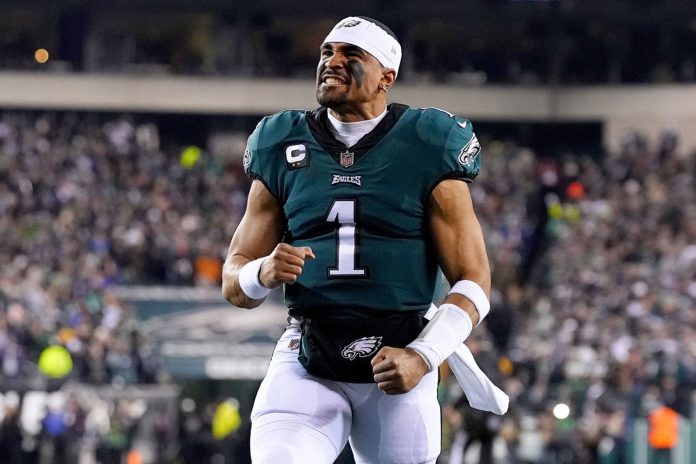
A deep analysis of how blockbuster quarterback contracts—like those signed by Joe Burrow, Jalen Hurts, or Justin Herbert—reshape team structures, impact fantasy rosters, alter offensive strategy, influence scoring potential, and drive fantasy draft strategy in today’s NFL.
Overview of the NFL’s Highest-Paid Quarterbacks
Dak Prescott leads with a record-setting $240 million, averaging $60 million per year. Tied at $55 million AAV are Joe Burrow, Josh Allen, Trevor Lawrence, and Jordan Love. Following them are Tua Tagovailoa ($53.1 M), Brock Purdy ($53 M), Jared Goff ($53 M), Justin Herbert ($52 M), and Lamar Jackson ($52 M). Combined, quarterback contracts now exceed $3 billion.
Jalen Hurts agreed to a five-year, $255 million extension with $180 million guaranteed and a $51 million average annual value, momentarily making him the highest-paid quarterback in NFL history.
Justin Herbert signed a five-year, $262.5 million extension at $52.5 million per season, which included $193,738,375 in guarantees and $133,738,375 fully guaranteed at signing.
Joe Burrow then signed a five-year, $275 million extension with an average of $55 million per year and over $219 million guaranteed.
Patrick Mahomes’ $450 million contract yields a lower AAV around $45 million yet remains one of the most lucrative in NFL history.
How Salary Caps Alter Supporting Casts (WRs, RBs, O-Lines)
When a quarterback earns $55 million or more annually, teams are forced to make difficult decisions on spending. Massive deals reduce the flexibility to retain elite wide receivers, running backs, or rebuild offensive lines. Teams must allocate resources differently, which reshapes supporting casts and affects fantasy football production.
These financial pressures force front offices to prioritize cheaper players through rookie contracts and bargain veteran signings. Teams often depend on the NFL Draft to fill critical positions affordably while focusing significant resources on protecting their high-paid quarterbacks.
Fantasy Fallout: When Elite QBs Get Paid, Who Benefits or Suffers?
Massive quarterback deals ripple through fantasy football. When elite QBs secure record-breaking contracts, their own fantasy production often takes a hit, as supporting weapons become more difficult to retain. On average, quarterbacks slide 3.5 spots in fantasy rankings after signing new mega-contracts, representing about 38 percent of their prior rank. Running backs and wide receivers on these teams may also suffer when the surrounding depth thins out.
However, there are winners. Savvy fantasy managers can exploit these changes by targeting undervalued mid-tier players on teams where QBs command large salaries. With resources focused on one superstar, talented skill players often remain overlooked and can deliver strong production at a fraction of their draft cost.
As big NFL deals push positional values, managers using a fantasy football auction draft format gain a strategic edge. Understanding which teams are cap-strapped lets managers reassign value dynamically, securing bargains where others see uncertainty.
Historical Examples of Contracts That Shifted Fantasy Expectations
Deshaun Watson’s five-year, $230 million fully guaranteed deal with the Browns remains a landmark. That contract locked up significant cap space, limiting the team’s ability to invest in offensive support, which had a clear ripple effect on fantasy scoring projections.
Jalen Hurts’ $255 million deal reset the quarterback market. It paved the way for Lamar Jackson, Joe Burrow, and Justin Herbert to secure their own record-breaking extensions. Burrow’s $55 million AAV surpassed Hurts, while Herbert’s $52.5 million positioned him just behind, shifting financial expectations across the league.
Fantasy managers trying to quantify ripple effects often rely on structured frameworks like a fantasy football auction draft to assign value when big NFL deals reshape the available talent pool.
Fantasy Managers’ Tactics Amid Contract-Driven Shifts
Average Draft Position (ADP) plays a major role in identifying where value emerges following mega-contracts. Historical data shows Lamar Jackson was drafted as QB4 but finished as QB1, while Joe Burrow, drafted as QB7, ended up QB3—clear examples of underpriced QBs outperforming expectations. Conversely, Patrick Mahomes, despite his talent, sometimes underdelivers relative to ADP due to surrounding roster constraints.
Deep sleepers offer hidden value. Players like Geno Smith, Sam Darnold, and Joe Flacco demonstrate that late-round picks can deliver high upside without costing premium draft capital.
In salary cap formats, building around rookies offers flexibility. Managers investing in low-cost quarterbacks or young receivers can stockpile productive options while avoiding the pitfalls of relying too heavily on high-priced veterans.
Interestingly, 2024 recorded the lowest correlation between QB ADP and per-game scoring, showing unpredictability. Still, the top-12 drafted quarterbacks produced 43.1 percent of QB1 scoring weeks, proving elite options remain valuable in shaping fantasy outcomes.
Offensive Strategy Shifts and Fantasy Implications
Once a quarterback is secured on a mega-deal, offensive schemes typically adapt. Teams often prioritize pass protection, adding reinforcements to their offensive lines, sometimes at the expense of explosive, gadget-driven plays. For dual-threat QBs like Jalen Hurts or Lamar Jackson, fewer designed runs or scrambles can lower rushing upside, impacting fantasy totals.
Resource allocation also becomes evident in how teams draft and deploy running backs. With reduced budgets, franchises often lean on committees rather than workhorse backs, creating volatility for fantasy managers.
Cap-and-Contract Domino Effects Across the League
Every time one elite quarterback signs a record contract, ripple effects cascade across the NFL. Jalen Hurts’ $255 million deal set a new benchmark, followed by Joe Burrow, Justin Herbert, and Trevor Lawrence leveraging his numbers to negotiate even richer extensions. These contracts do not just affect those teams—they reset expectations league-wide.
For fantasy managers, tracking these milestones offers predictive power. By anticipating which franchises will be cap-strapped, they can spot value among skill players most likely to see increased workloads on budget-constrained rosters.
Cap-Year Fantasy Performance Trends
Quarterbacks entering contract years often elevate their performance as they seek massive extensions. Younger QBs tend to benefit the most, delivering breakout campaigns to secure future earnings, while aging journeymen generally see less impact.
However, big-money QBs also face intensified defensive pressure, raising injury risks and creating volatility in fantasy scoring. Managers drafting around elite quarterbacks must balance the upside of reliable production against the potential for costly absences.
Preparing for Drafts in a Post-Contract World
Understanding how mega-contracts reshape team rosters is crucial for dominating fantasy drafts. Monitoring ADP movement tied to quarterback deals allows managers to adjust strategies effectively.
Targets often emerge among skill players whose fantasy value drops artificially due to perceptions of diminished offensive depth. Savvy drafters capitalize by selecting undervalued receivers, running backs, and tight ends who still benefit from elite quarterback play despite financial constraints elsewhere.
As salaries balloon, fantasy managers who adapt quickly to shifting landscapes consistently gain an edge over those who rely solely on past performance metrics.