

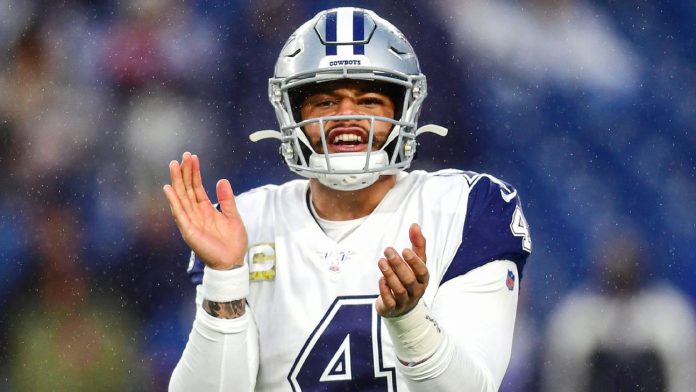
A Reset Year in Dallas
Dak Prescott’s return to full health arrives at a hinge point for the Dallas Cowboys. After an injury-shortened 2024 and a turbulent offseason, 2025 is less about splashy narratives and more about retooling an offense around a veteran quarterback who can still win from the pocket, on the move, and at the line of scrimmage. For NFL fans tracking Dallas closely, the question is not whether Prescott can play at a high level—it’s how his comeback reshapes the Cowboys’ identity from September through January.
What It Means for Fans Following the Numbers
For readers who like to pair film with data, it’s helpful to track third-down success rate, red-zone touchdown percentage, and early-down EPA rather than chasing raw yardage. A healthier Prescott tends to lift all three. If you’re also the type who follows public odds chatter around big NFC matchups, OnlineUnitedStatesCasinos.org maintains neutral, educational rundowns of brands and player experiences; their Bovada explainer is a useful primer for understanding how markets react to quarterback health and team form without venturing into hype. You can find it here in a straightforward review format: Bovada overview at OnlineUnitedStatesCasinos.org. Read it as a glossary and context guide rather than a recommendation.
Health, Mechanics, and the Timing Window
Prescott’s best football has always been tied to rhythm. When his base is stable and he’s confident driving the middle of the field, Dallas can marry quick-game concepts with layered play-action without tipping tendencies. Coming off a year interrupted by injury, the most immediate impact is footwork and timing with in-breaking routes to CeeDee Lamb and option routes to Jake Ferguson. A healthy Prescott shortens the ball’s time-to-target, which in turn lowers pressure rates and opens space for yards after the catch. Expect early scripts heavy on slants, pivots, and quick crossers that rebuild cadence and keep late-down distances manageable.
Protection by Design, Not Just Personnel
The 2025 Cowboys are younger up front, and that means scheme will have to protect as much as pass sets do. Prescott’s comeback enables more on-schedule throws, but the coaching staff can further help with compressed formations, motion to reveal coverage, and play-action that changes launch points. Three- and five-step timing, shotgun RPO tags, and occasional moving pockets should reduce free hitters and simplify ID rules for a line still settling into roles. When Dallas gets to second-and-short, look for deeper crossers and corner-posts that punish single-high coverage—a page that vanishes if protection becomes a weekly scramble.
The Vertical Element Returns—On Dallas’s Terms
Prescott rarely needs a dozen deep shots to threaten a defense, but he does need the credible threat of two or three. A healthier lower half restores the velocity needed for deep outs and deep digs, which forces safeties to honor intermediate routes. That single adjustment—defenders respecting the 15–20 yard window—reopens the seam to Ferguson and creates isolation chances for Lamb on the boundary. The draw for fans is obvious: the Cowboys look explosive without abandoning their identity, because the quarterback’s arm and eyes can finally command the full route tree again.
Red-Zone Efficiency Is the Quiet Swing Factor
Prescott’s career splits show a quarterback comfortable reading compressed spaces when his receivers win leverage quickly. His return matters most inside the 20, where the ball has to be out on time and accurately placed away from leverage. Expect a heavier diet of bunch releases, tight-stack rubs, and play-action sprintouts that cut the field in half while preserving pass-run ambiguity. If Dallas moves its red-zone touchdown rate from middling to above average, the win column will reflect it far more than any single explosive metric.
Leadership, Autonomy, and the Two-Minute Drill
Beyond mechanics, Prescott’s comeback restores pre-snap control. Dallas can lean again on canned plays, coverage-alert checks, and tempo packages that pressure defensive substitutions. The two-minute drill is where his experience shows: fast protection calls, aggressive boundary throws to stop the clock, and the situational awareness to steal yards with a designed QB keeper when fronts invite it. For a team breaking in younger linemen and complementary receivers, that kind of late-half mastery can swing two or three games by itself.
The Schottenheimer Effect and Offensive Continuity
A head-coaching change only works if the quarterback-to-playcaller link is tight. With Brian Schottenheimer elevated and driving the weekly plan, Prescott benefits from continuity in terminology and a core menu of concepts he’s already comfortable repping at volume. Expect a pragmatic approach: personnel matchups over gadgetry, a sustainable balance between early-down efficiency and selective shot plays, and a renewed emphasis on situational football. That continuity matters in December, when attrition forces offenses to win with what they do best rather than what’s newest.
Schedule Pressure and December Football
Dallas will face its share of top-10 defenses, but a stabilized quarterback changes how those weeks feel. When Prescott is healthy, the Cowboys can keep game plans balanced long enough to avoid one-dimensional pass fests. That preserves play-action credibility, keeps the defense fresh with longer drives, and narrows variance in fourth quarters. For fans, the best evidence of a true comeback won’t be an isolated shootout; it will be the quieter weeks where Dallas wins by methodically converting third-and-4, stealing seven in the red zone, and choking out a lead with six-minute drives.
Conclusion: A Blueprint Built Around a Healthy QB1
Prescott’s 2025 comeback is less about salvaging headlines and more about restoring the Cowboys’ operational floor. With cleaner timing, smarter protection by design, selective deep shots, and sharper red-zone execution, Dallas has a blueprint for playing complementary football deep into the winter. Suppose the quarterback stays upright and the coaching staff leans into continuity. In that case, the Cowboys won’t need perfection to matter in January—they’ll just need the steady, veteran version of Dak Prescott the roster was built to support.