The editorial team at Lucky Crush spends a lot of time thinking about digital platforms built around chance and real-time outcomes. What they’ve noticed, watching spaces like sports betting from the outside, is that the participants who do best aren’t necessarily the luckiest. They’re the ones who grasp the probability structures underneath the surface. This website draws on that same pattern, where understanding the mechanics matters far more than acting on instinct. That observation is exactly what makes sports betting worth examining carefully: odds aren’t just numbers on a screen. They’re a language, and reading them fluently changes everything about how you approach a wager.
Reading a Betting Line for What It Actually Says
Every betting line does two jobs at once. It tells you the implied probability of an outcome, and it tells you what you’ll be paid if you’re right. Those two functions are inseparable, and treating them as separate is where a lot of bettors go wrong.
American odds use a plus/minus format that’s simpler than it looks. A line of +150 means a $100 bet returns $150 in profit. A line of -150 means you need to wager $150 to profit $100. The minus side is the favorite; the plus side is the underdog. Once you’ve internalized that, you can start converting lines into implied probability, which is where the real analysis begins.
Implied probability is what the odds say the bookmaker thinks the chances are. Finding value, the entire goal of serious sports betting, comes down to identifying cases where you believe the true probability of an outcome is higher than what’s embedded in the line. If a team is priced at +200 but you genuinely think they have a 40% chance of winning, that’s a potentially valuable bet because the line implies only about 33%.
There’s one more structural piece to know: the vig, sometimes called juice. Bookmakers build a margin into every line, which is how they profit when action is balanced on both sides. That margin means a bettor winning exactly half their bets will actually lose money over time. Breaking even requires winning at a rate above 50% on standard lines, which is a higher bar than it sounds.
The Three Bets Every Bettor Encounters First
Point spreads, moneylines, and totals are the three formats you’ll see on virtually every game board, and each one measures something different.
The point spread is the dominant format in American football and basketball. The favored team doesn’t just need to win; they need to win by more than the spread. The underdog, meanwhile, can lose the game outright and still cover if they lose by less than the spread. This levels the field between mismatched teams and keeps betting action roughly balanced on both sides.
A moneyline bet strips all of that away. You’re simply picking who wins. No margin, no cushion. The tradeoff is that odds on the favorite can get steep quickly, sometimes requiring a large wager to win a modest return. Moneylines tend to appeal when a bettor has strong conviction on an underdog or wants to avoid the margin game entirely.
Totals, or over/unders, step back from the result entirely and focus on the combined score. The bookmaker sets a number; you decide whether both teams will combine for more or less than that figure. Weather, pace of play, and defensive matchups all become relevant inputs. It’s a bet type that rewards situational thinking over team loyalty.
What Shifting Lines Are Telling You
Lines don’t stay static from the moment they’re posted to the moment the game kicks off. That movement carries information, and paying attention to it is a legitimate piece of handicapping.
When a line opens and then shifts significantly, the most common explanation is that substantial, professional money has come in on one side. Recreational bettors tend to move lines only at the margins; large moves usually reflect where disciplined, volume players are putting their money. That’s the core distinction between sharp and recreational action.
Professional bettors, commonly called sharps, aren’t defined by a hot streak. What separates them is a systematic approach: careful line shopping across multiple books, consistent bankroll discipline, and a focus on long-term expected value rather than the outcome of any single game. Tracking line movement is one way recreational bettors can observe where that sharper money is landing, even without placing a bet themselves.
Bankroll Discipline Outlasts Any Single Wager
The most important skill in sports betting has nothing to do with picking winners. It’s managing how much you wager.
Bankroll management means setting a defined budget for betting activity and committing to wagering only a small, consistent percentage of that budget per game. That consistency is what allows a bettor to absorb a losing stretch, which every bettor will have, without going broke before the longer-term picture can emerge.
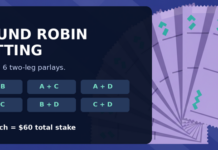
Parlays and futures sit at the high-risk end of the spectrum, and understanding why matters. A parlay combines multiple bets into one ticket, with every leg needing to win for the payout to hit. The potential returns are real, but the probability of winning drops with each additional leg. Futures, like championship bets placed before a season, carry long-term uncertainty and tie up a portion of your bankroll for months. Both have their place, but neither should anchor a betting strategy built around sustainable participation.
The bettor who survives long enough to learn from their bets is the one who treated their bankroll as something worth protecting. A consistent process, applied across many games, is what separates informed betting from gambling on feel.
Odds are a language. The bettors who learn to read them, really read them, are the ones making decisions rather than just guesses.