
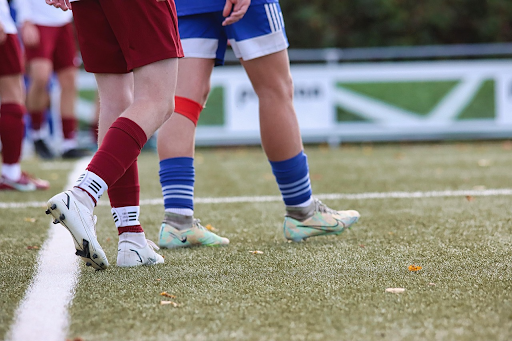
Most injuries in amateur sport aren’t freak accidents. They’re the predictable outcome of small habits that compound over weeks and months — skipped warm-ups, mileage ramped up too quickly, the same shoes worn long past their expiration. Professional athletes have teams of physiotherapists watching for these patterns. Weekend players usually don’t, which is why a basic understanding of how injuries actually happen tends to do more for amateurs than any single piece of recovery equipment. The good news is that the highest-yield habits are unglamorous and free.
Why Amateurs Get Hurt Differently Than Pros
A professional footballer playing 50 matches a year picks up injuries from extreme intensity and accumulated load. An amateur playing once a week gets hurt for almost the opposite reason: not enough conditioning, sudden bursts of effort the body isn’t prepared for, and weak supporting muscles that haven’t been trained for the sport’s actual demands. The classic Sunday-league pulled hamstring is rarely about bad luck — it’s a cold muscle being asked to sprint full speed after six days of sitting at a desk.
Warm-Ups That Actually Reduce Risk
Five minutes of light jogging followed by static stretching used to be the standard, and it’s been quietly disproven for over a decade. Static holds before activity don’t lower injury rates and can briefly reduce power output. What works is a dynamic warm-up that raises heart rate, increases muscle temperature, and rehearses the movements the sport demands. A reasonable template for any field sport:
- Three to five minutes of easy movement (jogging, skipping, light cycling)
- Dynamic mobility — leg swings, walking lunges, hip openers, thoracic rotations
- Activation drills — glute bridges, band walks, scapular pull-aparts
- Sport-specific build-up — progressively faster sprints, change-of-direction work, ball touches
The FIFA 11+ programme, originally designed for football but adaptable to most field sports, has consistent evidence behind it: clubs that use it regularly see roughly 30–50% fewer injuries in their amateur squads.
Knowing the Common Injuries and What Drives Them
Different sports concentrate damage in different places, but a short list of repeat offenders covers most of what physios actually see in their clinics. The table below maps the usual suspects to their typical triggers and the prevention focus that has the best evidence behind it.
| Common injury | Usual trigger | Where prevention starts |
| Runner’s knee | Mileage jumps, weak hips, worn shoes | Glute strength, gradual loading, shoe rotation |
| Ankle sprain | Uneven surfaces, fatigue, poor proprioception | Balance drills, calf strength, fitting footwear |
| Hamstring strain | Cold muscles, sudden sprinting, fatigue | Eccentric loading (Nordic curls), proper warm-up |
| Tennis/golfer’s elbow | Grip overload, technique faults | Forearm strengthening, equipment check, coaching |
| Lower back pain | Weak core, poor lifting form, deconditioning | Core stability, hip mobility, gradual progression |
None of these injuries require elite-level interventions to prevent. They mostly respond to consistent, basic strength work in the right places.
Sleep, Recovery, and Real Rest
Sleep is the recovery tool with the largest evidence base and the cheapest price tag. Studies of adolescent athletes have shown that fewer than eight hours of sleep per night roughly doubles injury rates compared with nine or more. Adults aren’t completely different. Hydration, basic nutrition (enough protein, enough calories), and stress management all sit in the same category: unsexy, free, and far more effective than ice baths or massage guns.
Rest days are when the actual adaptation happens. Muscles repair, connective tissue remodels, the nervous system consolidates what it learned on the field. Most amateurs underestimate how much of progress happens away from training. Filling rest days with another hard session, a long hike, or a competitive pickup game defeats the purpose. Genuine downtime is low-stimulation: sleep, an easy walk, time with family, or a relaxed indoor activity — reading, a long meal, or a short session on a streaming platform are all fine. Some athletes wind down with a quiet hobby like cards, chess, or a few rounds on a site such as play Runa Casino — the point isn’t the activity itself but that the body stays out of high-output mode for a full 24 to 48 hours after a hard session. Stacking stress on top of stress is one of the most common ways amateur athletes drift into injury without noticing.
Listening to Pain Before It Becomes an Injury
Most serious injuries leave a trail of smaller warnings. A twinge in the calf that disappears with warm-up. A knee that aches the morning after every match. Stiffness that lasts longer than it used to. Pushing through these is the amateur athlete’s favourite mistake. Taking a week off when something doesn’t feel right is dull, but it almost always costs less than the six weeks off that follow the eventual tear.
- Sharp pain during activity — stop, don’t push through
- Pain that worsens session over session — reduce load and get it checked
- Lingering stiffness over a week — reassess training volume and recovery
Training Smart Is the Whole Game
Amateur athletes don’t get better by training harder than their bodies can handle — they get better by training consistently for long enough that small gains compound. Injury prevention isn’t separate from improvement; it’s the same thing seen from a different angle. The athlete who stays healthy across a full season ends up well ahead of the one who has three brilliant weeks followed by two months on the sidelines. Boring, steady, well-warmed-up training wins almost every time.