
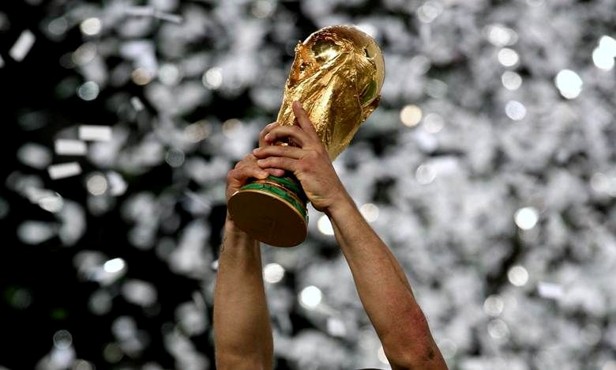
Across more than 90 years of World Cup football, the final has not always lived up to its billing. One-sided affairs and flat occasions have featured at some point, but a handful of matches have gone beyond the result and produced something that stays with you long after the final whistle. These are the ones that had goals, drama, turning points, and moments that are still referenced decades later.
From England’s only major international triumph to Lionel Messi’s long-awaited crowning moment in Qatar, supporters who follow World Cup betting odds keep coming back to these five finals above all others. Here is a look at why each one earned its place.
Argentina 3-3 France (Argentina win 4-2 on penalties), 2022
There is a strong case that the 2022 World Cup final in Lusail was the greatest final ever played. Argentina led 2-0 with ten minutes remaining, Messi having scored from the penalty spot and Angel Di Maria adding a second, and France had barely been in the game. Then Kylian Mbappe scored twice in the space of 97 seconds to make it 2-2 and force extra time.
Messi bundled Argentina back in front during the additional period, only for Mbappe to complete his hat-trick from the spot with two minutes remaining. The shootout eventually settled it in Argentina’s favour, with Emiliano Martinez saving from Kingsley Coman and Aurelien Tchouameni missing altogether. Messi finally had his World Cup, while Mbappe, despite scoring three goals in a final, still ended up on the losing side.
Brazil 2-0 Germany, 2002
The 2002 final in Yokohama was Ronaldo’s tournament and his match. He had arrived in France four years earlier as the player everyone expected to carry Brazil to glory, only for a mysterious pre-match seizure to leave him visibly diminished in a 3-0 defeat. In Japan, he made absolutely certain there was no repeat.
Ronaldo scored both goals in the 2-0 victory over Germany, finishing the tournament as the top scorer with eight goals. Brazil went through the competition unbeaten, with Ronaldo, Ronaldinho, Rivaldo, and Cafu all contributing to a side that was as close to irresistible as the modern game has produced. It remains one of the most complete individual redemption stories in the history of the tournament.
Argentina 3-2 West Germany, 1986
Diego Maradona did not score in the 1986 final, but he had produced the two most discussed goals of the competition in the quarter-final against England and dismantled every side put in front of him. By the time the final came around in Mexico City, Argentina looked destined to win.
Argentina led 2-0 before West Germany mounted a late comeback and equalised with six minutes remaining. It looked as though extra time was inevitable, but Maradona slid a pass through to Jorge Burruchaga, who finished calmly to win it 3-2 with three minutes left. West Germany pushed forward but could not find a third equaliser. Argentina were world champions, and Maradona had the trophy his football deserved.
England 4-2 West Germany, 1966
England have not come close to matching it since, which makes the 1966 final at Wembley all the more significant in the national consciousness. Bobby Moore led his side to a 4-2 victory over West Germany in a final that had almost everything: a late equaliser, extra time, a disputed goal, and a hat-trick from Geoff Hurst, who only started because of an injury to Jimmy Greaves.
West Germany pulled it back to 2-2 in the 90th minute before Hurst’s shot struck the underside of the crossbar and bounced down, with the linesman judging it to have crossed the line. Hurst completed his hat-trick in the final seconds to settle it, becoming the only player to score three goals in a World Cup final. Nearly 60 years on, it remains England’s only major international honour, but they will head to North America this summer with the hope of finally bringing it home, and the England odds reflect their chances.
Brazil 4-1 Italy, 1970
If there is a benchmark for what football can look like at its highest level, it is the 1970 World Cup final in Mexico City. Brazil’s squad included Pele, Jairzinho, Rivelino, Tostao, and Carlos Alberto, and by the time they faced Italy in the final, they had scored 18 goals in five previous matches. Pele opened the scoring with a header before Roberto Boninsegna equalised for Italy, but Brazil’s quality was simply beyond anything the Azzurri could match.
Gerson, Jairzinho, and Carlos Alberto all scored in the second half, with the fourth a sweeping team move finished by the captain that remains one of the most celebrated goals in the competition’s history. Jairzinho scored in every game of the tournament, a record that has never been matched. By winning their third title, Brazil kept the Jules Rimet Trophy permanently. More than 50 years on, this side remains the reference point for the best football has ever produced.