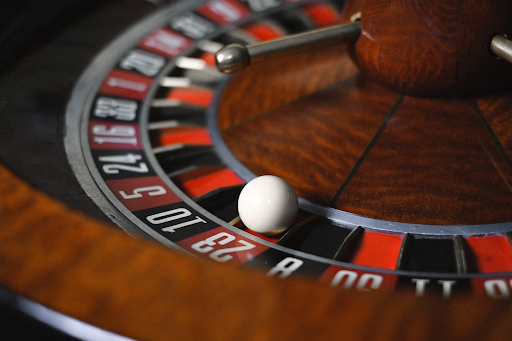
Roulette looks mechanical, but players rarely make decisions like machines. The wheel spins, the ball jumps, the chips sit there looking too still, and suddenly a simple bet starts carrying a little emotional weight. A player may say they are choosing red because it feels right, or 17 because it has not shown up, or zero because “it has to happen sometime.” That is not strategy talking but psychology sneaking into the betting layout.
Why Every Spin Feels Urgent
The game encourages quick decisions because every spin feels separate and urgent. The betting timer runs, the dealer waits, the last result still sits in the mind, and the next chip starts to feel like a response. Roulette gives players just enough choice to feel involved, but not enough control to change the odds. That uncomfortable gap creates most of the strange betting behaviour at the table.
When Random Results Start Looking Like Patterns
The first mistake often comes from seeing patterns where none exist. Five black results can make red look overdue, even though the wheel has no memory and no sense of balance. A player watching https://roulette77.us/live-roulette in the middle of a fast session may feel that the next spin should correct the last few results, but random outcomes do not work that politely. The ball does not review history before it drops.
This is where the gambler’s fallacy does real damage. It tells players that a recent streak must soon reverse, or that a cold number deserves attention because it has been absent too long. The same thinking appears in many risk settings, and the gambler’s fallacy can distort risk decisions because people often expect random events to “even out” sooner than they actually do. Roulette turns that bias into a very expensive habit.
Why the Wheel Feels More Personal Than It Is
Roulette has a talent for making neutral results feel personal. A chip on 23 misses by one pocket, and the player feels robbed. A corner bet loses because the ball lands just outside the block, and suddenly the next spin becomes a chance to “finish the thought.” That sounds dramatic, but it happens all the time. Near misses make the brain act as if it almost learned something.
A strong roulette player has to notice that feeling before it turns into a bet. According to Roulette 77, live roulette decisions often become messy when players react to the last spin instead of following the plan they had before the session started. That small difference matters. A planned bet has a reason. A revenge bet has a pulse.
The same problem appears after a win. A player hits a number, feels sharp, and starts treating confidence like information. The next bet gets bigger. The layout gets wider. A calm $2 session becomes a $10 spin with chips scattered around the felt because the last result created a rush. The wheel did not become easier, the player just became louder inside their own head.
The Main Biases Behind Roulette Choices
Psychology does not need to be complicated to hurt a bankroll. Most roulette mistakes come from a few simple mental shortcuts. They feel natural in the moment, which makes them dangerous.
| Bias or emotion | How it shows up in roulette | Typical betting mistake | Better response |
| Gambler’s fallacy | “Red is due after six blacks” | Betting more on the expected reversal | Treat every spin as separate |
| Hot-hand belief | “This number keeps winning” | Chasing recent hits | Remember past spins do not guide the next one |
| Loss chasing | “One bigger bet will fix this” | Raising stakes after losing | Stop or return to the planned unit |
| Near-miss effect | “It almost landed there” | Adding neighbours after a close miss | Count it as a full loss, not a clue |
| Overconfidence | “I can read the table now” | Expanding the layout too fast | Keep stake size stable |
| Sunk cost thinking | “I’ve already lost too much to quit” | Staying longer than planned | Use a stop-loss before play starts |
| Anchoring | “I started with $100, so I need to get back there” | Ignoring current risk | Judge the next bet on its own |
| Superstition | “This number feels lucky tonight” | Confusing ritual with probability | Keep lucky bets small and optional |
The rules stay fixed, but the player’s mind keeps changing the story. One spin becomes “almost.” Another becomes “proof.” A third becomes “payback.” That is how a simple game turns into a noisy internal argument.
Why Losses Feel Bigger Than Wins
A $10 loss usually hurts more than a $10 win pleases. That imbalance affects roulette betting because players often try to remove the pain quickly. They raise the stake, change bet types, or chase the number that “should” have landed. The goal stops being good play and becomes emotional repair.
This is why bankroll rules matter. They create a decision before the emotion arrives. A stop-loss, a fixed unit size, and a spin limit sound boring, but they protect the player from making financial choices in the hottest part of the session. Roulette is fast enough without letting frustration drive.
Before playing, a player should set a few rules that do not change mid-session:
- Choose one unit size and keep it steady.
- Set a stop-loss before the first spin.
- Decide how many spins or minutes the session will last.
- Avoid increasing bets after losses.
- Treat near misses as losses, not signals.
- Take a break after a big win or a sharp losing run.
Those rules do not make roulette profitable – they make the player less reactive, and that is already a major improvement.
Superstition, Ritual, and the Comfort of Lucky Numbers
Roulette has always attracted rituals: some players like birthdays, someone avoids numbers that recently missed. Then some prefer one colour because it “feels cleaner.” These habits are not always harmful if the stake stays small and the player understands the difference between entertainment and prediction.
Lucky numbers become a problem when the player starts treating them as evidence. A favourite number has the same chance as every other number on the same wheel. On an American wheel, one number has 1 chance in 38. On a European wheel, it has 1 chance in 37. Personal meaning does not change that.
Still, roulette would be less fun if every player behaved like a spreadsheet. A harmless lucky chip can add flavour to a session. The danger starts when the lucky chip becomes the main plan, then the recovery plan, then the reason to keep going after the budget has already complained.