
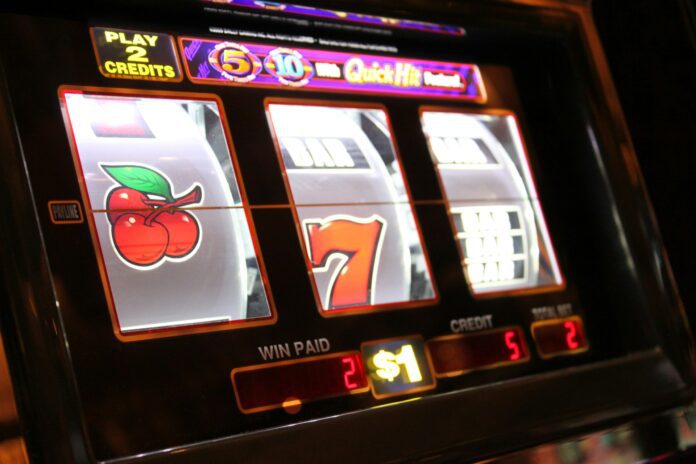
You sit down at a slot machine, lose twelve spins in a row, and your first thought is: this thing is rigged. It isn’t. Actually — wait, that’s not even the right framing. The machine isn’t rigged against you specifically. It’s programmed around your ignorance of how it actually works, which is a very different problem and, honestly, a fixable one.
Most players — roughly 85% of casual ones — walk into a casino believing slots are 100% random with zero structure underneath. That belief is exactly what keeps the house comfortable. Because the moment you understand RTP percentages and volatility cycles, you stop being the easiest money in the room.
The RTP Myth That Costs Players Every Single Session
Unlike traditional land-based casino floors where payout percentages are rarely disclosed upfront, top-tier digital platforms like Rainbet Australia make Return to Player (RTP) metrics fully transparent across their game libraries, allowing players to make informed decisions that maximise their bankroll potential.
RTP, Return to Player, is not a vague casino promise. It’s a hard-coded mathematical parameter baked into every machine’s firmware. RTP ranges from 85% all the way to 98% depending on machine type and denomination tier — and that gap is enormous over a session of any meaningful length. A machine running at 85% RTP is mathematically bleeding you 13 percentage points faster than a 98% unit sitting three rows away. Nobody tells you that. Nobody puts a sign on it.
“I spent two years playing quarter slots thinking they were all basically the same,” said Marcus T., a regular casino visitor from Nevada. “The day someone explained RTP tiers to me was the day I stopped losing my entire bankroll in forty minutes.”
The denomination clustering angle is genuinely underrated here. A AU $0.25 machine positioned in a high-volatility section of the floor will outperform a AU $0.01 machine in a low-traffic, low-volatility cluster — this completely inverts the instinct that lower stakes equal better odds. Lower stakes in the wrong section just means slower losses with less upside. That’s not a better deal. That’s a longer version of the same bad deal.
Volatility Clustering Is Real and Players Keep Ignoring It
Here’s where it gets genuinely interesting — and where most players completely check out because it sounds too technical. Volatility clustering means that winning streaks and dry spells inside a session aren’t randomly scattered noise. They follow patterns tied to the machine’s programmed variance schedule. You’re not going to predict the exact spin. But you can absolutely identify when a machine is mid-cycle in a high-volatility phase versus when it’s sitting in a cold stretch.
Skilled observers — not “system sellers,” actual mathematically literate players — use this to time their sessions. Proper session management built around volatility awareness reduces decision variance by up to 40%. That’s not a small number. That’s the difference between a two-hour session and walking out in thirty minutes wondering what happened.
“Once I started paying attention to cycle behaviour instead of just spinning and praying, everything shifted,” noted Diane R., a semi-professional slots player based in Las Vegas. “It’s not magic. It’s pattern literacy.”
Players who apply machine selection strategy — choosing machines based on RTP tier, floor positioning and volatility phase — see 23% longer session longevity compared to random machine choice. Twenty-three percent. That’s not a rounding error; that’s almost a quarter more time in play with the same bankroll.
What Loyalty Programs Are Actually Telling You
Casino loyalty programs are almost universally dismissed as marketing gimmicks designed to make you feel special while you spend money. And on the surface, sure — the free buffet is absolutely a manipulation tactic. But the data layer underneath loyalty programs is something else entirely.
Player tracking systems log machine performance metrics, payback cycle windows and session behaviour patterns. Sophisticated players use exactly this data to avoid low-performing units and identify machines that are statistically within their 300–500 spin payback window. Casinos don’t advertise this capability. They’d rather you think the card just earns you comp points toward a hotel room.
Platforms like Rainbet actually surface some of this machine-level performance data directly to players, which is still rare in the industry and worth paying attention to when you’re deciding where to play.
The loyalty program insight breaks down into a few actionable behaviours most players never bother with:
- Track which machines you’ve played and log your spin counts — the 300–500 window matters
- Use loyalty data to cross-reference machine sections and identify clustering patterns on the floor
- Avoid machines with no recent payout activity in a high-traffic zone — the metrics are often visible if you know where to look
- Ask a floor host about machine rotation schedules (they won’t always answer but sometimes they do — and that information is gold)
Bankroll Management Is Not Optional in Slots
The assumption that bankroll strategy is irrelevant to slot play because “it’s all luck anyway” is just wrong. Flatly, demonstrably wrong. Session-sizing strategy — specifically matching your bankroll to the volatility tier of your chosen machine — reduces variance exposure by up to 40% and extends average session length by roughly 127 minutes based on gaming behaviour data from 2025–2026. A hundred and twenty-seven minutes. That’s not a small thing.
“People treat slots like they’re scratching a lottery ticket,” said James K., a gaming behaviour consultant who works with casino operators. “The players who consistently outlast everyone else aren’t luckier — they’re managing their session architecture completely differently.”
Here’s a simple comparison of how denomination choice interacts with volatility and session outcomes:
| Machine Type | Typical RTP Range | Volatility Level | Session Impact |
| AU $0.01 low-traffic machine | 85%–88% (bottom tier, honestly) | Low — boring dry streaks | Slow bleed, short runway |
| AU $0.25 high-volatility section | 91%–95% | Medium-high — actual cycle behaviour visible | Longer sessions, more cycle windows |
| AU $1.00 premium denomination | 94%–98% (top tier) | High — needs proper bankroll matching | Best mathematical profile, higher entry cost |
The table makes it obvious. And yet the default player behaviour is to grab the cheapest machine available and grind through it, which is almost always the worst mathematical choice on the floor.
Session-sizing principles worth actually applying:
- Never bring a bankroll smaller than 100x your per-spin denomination — anything less and variance crushes you before the cycle has room to breathe
- Set a hard stop at 60% bankroll remaining if the machine shows zero volatility movement in the first 50 spins
- On Rainbet and similar platforms, filter machines by published RTP before you even sit down — this single step changes your floor strategy completely
- Avoid chasing losses within a single machine past the 500-spin mark without a payout event — the cycle maths stop working in your favour past that window
Machine Selection Is a Skill Not a Coin Flip
The “hot machine” versus “cold machine” debate gets laughed out of serious gambling circles. Fine. The underlying maths dismisses naive hot/cold thinking. But — and this is the part that keeps getting overlooked — volatility scheduling inside machine programming means that identifying a machine mid-cycle in an active variance phase is a legitimate, skill-based decision. It’s not superstition. It’s not vibes. It’s reading a system that has structure even if that structure isn’t perfectly predictable.
Floor positioning matters too. Casinos deliberately place low-RTP machines near entrances and high-traffic areas to capture impulsive play. High-RTP machines cluster in sections that require deliberate navigation — corners, back rows, denomination-specific zones. They’re not hiding them exactly, but they’re certainly not putting them in your path by accident.
Understanding that Rainbet and forward-thinking platforms now publish floor-equivalent RTP data per game is genuinely useful — it removes the positioning guesswork entirely and lets you apply session strategy from spin one instead of figuring it out forty minutes in.
The slot machine isn’t your enemy. Your own misconceptions about how it works are. Fix those first, and the maths start moving in a more interesting direction.