
Cricket and baseball are both bat-and-ball sports in which teams score runs and try to dismiss opposing batters, but they organise almost every part of play differently. Cricket revolves around two batters, two wickets and repeated deliveries on a central pitch, while baseball uses a diamond of four bases, separate half-innings and a fixed sequence of batters. Their bats, fields, scoring methods and tactical priorities produce distinctly different viewing and playing experiences.
The shared idea behind both sports
At their core, cricket and baseball follow a familiar contest: one side bats while the other fields. The batter attempts to strike a delivered ball into space, score runs and avoid being put out. Fielders seek to limit scoring, catch hit balls and create dismissals before the batting side completes its turn.
Both games also reward hand-eye coordination, anticipation and accurate throwing. A caught ball can dismiss a batter in each sport, and a ball hit beyond the playing area can bring immediate runs. Yet these broad similarities can be misleading. A cricket batter may remain at the crease for a long innings, whereas a baseball batter’s turn normally ends after a single plate appearance.
How innings and turns work
A baseball game is generally structured around nine innings for each team. Every inning is split into two half-innings: one team bats and the other fields, then their roles reverse. The batting team’s half-innings ends after three outs. If the score is tied after the scheduled innings, extra innings can be played.
Cricket uses the word “innings” differently. It describes one complete batting turn by a team. Depending on the format, a side may have one innings or two. In limited-overs cricket, an innings also ends when the allotted number of legal deliveries has been completed. An over contains six legal balls, so a 20-over innings allows a maximum of 120 legal deliveries before extras are considered.
This distinction changes the rhythm of the sports. Baseball repeatedly alternates between batting and fielding in short blocks. In cricket, one side may bat for a prolonged period before the other begins its response.
Scoring: wickets versus bases
In cricket, two batters are on the field together. They stand at opposite ends of a 22-yard pitch, with a wicket at each end. After the ball is played, they can run and exchange ends. One completed exchange counts as one run. The batter at the striker’s end when the ball becomes dead faces the next delivery.
A ball that reaches the boundary after touching the ground scores four runs. If it clears the boundary without first bouncing, it scores six. Batters are not required to run after making contact; they can choose whether the risk of attempting a run is worthwhile.
Baseball scoring is based on advancing around four bases. A batter who puts the ball into fair territory must generally run towards first base. A run is scored only when a player completes the circuit and returns to home plate. A hit over the outfield fence in fair territory is a home run, allowing the batter to score immediately and potentially bring other runners home.
For readers following cricket regularly, TheCricScope can be useful for understanding how individual deliveries and phases of an innings influence the overall score.
Dismissals and outs
The most important aim for the fielding side in both sports is to remove batters, but the routes differ. In cricket, a batter can be dismissed when a fielder catches a hit ball before it bounces. A batter may also be bowled when the delivery hits the wicket, or run out when the fielding side puts down a wicket while a batter is outside their ground.
Other cricket dismissals arise from the interaction between the ball, bat and wicket. The wicket is therefore central to both defence and attack. A batter uses the bat not merely to score but often to prevent the ball from hitting the stumps behind them.
In baseball, a batter can be out through a caught fair ball, a strikeout, or a force or tag play while running between bases. Three outs end the batting team’s half-innings. Unlike cricket’s limited-overs formats, the fielding side must create those outs to switch sides; simply completing a fixed number of pitches does not end a half-innings.
Field layout and playing area
Cricket is played on a large ground, commonly oval in appearance, with a rectangular pitch at its centre. There are no foul areas comparable to baseball’s. A ball can be played anywhere around the ground, and fielders may be placed in many directions depending on the bowler’s plan and the batter’s strengths.
The cricket pitch measures 22 yards between the wickets. According to the comparison published on Wikipedia, the typical distance between a bowler’s release point and a batter is about 58 feet, though the ball normally bounces before reaching the batter. This bounce introduces a major tactical variable, as the surface can affect height, pace and movement after pitching.
Baseball is played within fair territory bounded by two foul lines. Its base-running area forms the familiar diamond, while the wider outfield extends beyond it. The official minimum distance from home plate to the nearest obstruction in fair territory is 250 feet, with longer recommended distances along foul lines and in centre field. Balls hit outside the foul lines are generally not playable as fair hits.
Bats, balls and protective equipment
The visual difference between the bats is immediate. A cricket bat has a broad, flat striking face, allowing batters to play the ball in many directions with a vertical or horizontal swing. A baseball bat is narrow and round, demanding a different type of contact and timing.
Cricket fielders generally catch the ball with bare hands, except for the wicket-keeper, who uses gloves and protective leg pads. Batters wear substantial protection, including pads, gloves, a helmet and a box. Additional guards for the chest, arms or thighs may also be used.
Baseball fielders wear gloves that extend their reach and help them receive hard-hit balls. Catchers use more protective equipment because they receive pitches from directly behind home plate. Baseball batters wear helmets and may add guards for vulnerable areas such as the elbow, shin or hand.
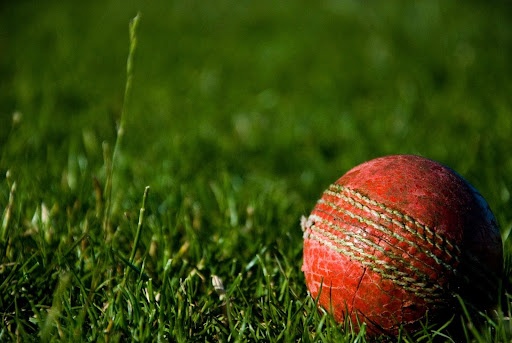
The ball is also handled differently during a game. Cricket balls can remain in use for a substantial period, and their condition can become tactically relevant. Baseballs are replaced much more frequently, particularly after contact with the ground or bat. This means the ageing ball is a more noticeable element of cricket strategy.
Bowling and pitching differences
A cricket bowler delivers the ball towards the batter and wicket from one end of the pitch. The ball may bounce before it reaches the batter, and bowlers alternate ends after each over. In limited-overs cricket, restrictions apply to how many overs one bowler can deliver, encouraging teams to distribute their bowling resources.
In baseball, the pitcher delivers towards home plate from the pitcher’s mound. The batter attempts to judge whether to swing while also accounting for the strike zone. A baseball pitch does not need to bounce before arriving at the batter, so the contest places special emphasis on the direct flight of the ball.
Both sports involve a delivery distance of broadly similar scale, but the path of the ball makes the challenge different. Cricket batters must assess bounce as well as line and length. Baseball batters must make rapid decisions on pitches travelling directly through or near the strike zone.
Tactical priorities on the field
Cricket teams can change field placements frequently and shape them around a specific bowler-batter contest. A captain may position fielders close to the bat to pursue catches, spread them to protect boundaries, or place them where a batter commonly hits. In limited-overs cricket, preventing runs can be as important as taking wickets because the batting innings has a delivery limit.
Baseball strategy is strongly connected to the base situation and number of outs. Fielders may position themselves to limit a particular hitter, while the batting side considers whether advancing a runner is worth sacrificing an out. Because runners are compelled to advance in certain circumstances, defensive plays at bases are a fundamental part of the game.
Cricket’s equivalent running pressure is more flexible. Batters decide whether to leave their creases and attempt a run, so fielding sides must combine wicket-taking opportunities with sharp work in the ring and accurate throws at the stumps.
Why the games feel so different
The biggest difference is not simply that cricket can last longer. It is that each sport asks its players to solve different problems. Cricket combines wicket defence, running judgement, boundary-hitting and adaptation to a bouncing ball. Baseball centres on plate appearances, base advancement, direct pitching and the accumulation of three outs per half-innings.
Both games reward skill, teamwork and tactical intelligence, but their rules create different forms of tension. Cricket builds pressure delivery by delivery and partnership by partnership, while baseball often concentrates it into individual pitches, outs and base-running decisions.