
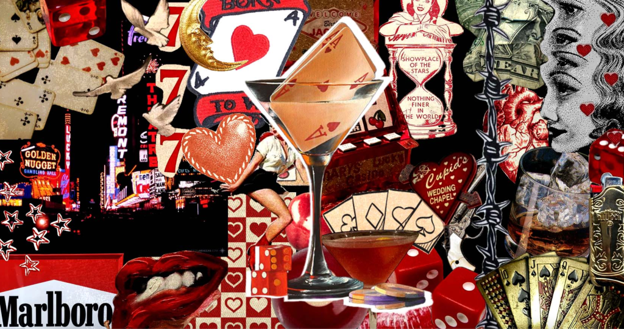
There is a particular aesthetic that the word “casino” conjures instantly. The green felt tables. The low light and the cigarette smoke. A jazz piano somewhere in the background. A man in a perfectly cut suit losing a fortune with an expression that suggests he could not care less. It is an image so embedded in popular culture that even people who have never set foot in a casino recognise it immediately.
How did gambling become one of pop culture’s most durable obsessions? And what does the way music and film portray casinos reveal about why we find them so endlessly fascinating?
The Casino as a Cultural Setting: What It Represents
Before we get into specific songs, films, and artists, it is worth asking what the casino actually represents as a cultural symbol. Because it is not really about gambling at all.
The casino, in its cultural incarnation, is a space where normal rules are suspended. Time works differently — casinos are famously designed to have no clocks, no natural light, to create a bubble outside ordinary chronology. Money operates differently — transformed into chips, it briefly loses the psychological weight it carries in everyday life. Social hierarchies can be inverted — the person at the baccarat table might be nobody outside these walls, or they might be someone extraordinary. You cannot always tell.
This makes the casino uniquely useful as a storytelling device. It is a liminal space — between the ordinary and the extraordinary, between security and risk, between who you are and who you might become. And liminality, as any good storyteller knows, is where the most interesting things happen.
Casino Culture in Music: A History
Jazz and the Original Casino Aesthetic
The association between casino culture and jazz is not accidental. The great gambling establishments of the early twentieth century — in Las Vegas, in Monaco, in Havana before the revolution — built their atmospheres partly on live music, and jazz was the sound of choice. Lounges, poker rooms, and casino floors were accompanied by the piano trio, the small combo, the vocalist in the evening gown.
This produced a particular aesthetic that still persists: the cocktail-jazz casino mood is immediately recognisable in everything from hotel lobbies to film soundtracks, even when the connection is not consciously acknowledged. Artists like Nat King Cole, Frank Sinatra, and Dean Martin were not just performers — they were the human embodiment of the Las Vegas casino golden age. Their recordings carry that atmosphere in every note.
The Rat Pack and Las Vegas as a Cultural Idea
No cultural history of casino music is complete without the Rat Pack. Sinatra, Dean Martin, Sammy Davis Jr., Peter Lawford, and Joey Bishop defined the casino as a place of effortless sophistication and masculine cool in a way that has never quite been equalled.
The Rat Pack’s residency at the Sands Hotel in Las Vegas in the late 1950s and early 1960s produced some of the most iconic live performances in entertainment history. Their shows blended comedy, music, and a kind of conspiratorial insiderness — the audience felt like they were in on a joke with the most glamorous people in the world. The casino was the stage, the setting, and the subject matter simultaneously.
Songs like “Luck Be a Lady” — from Guys and Dolls, performed by Sinatra — became genuine cultural artefacts, their connection to gambling transcending the gambling context entirely. You do not need to care about dice to feel something in that performance.
Hip-Hop and the Casino Aesthetic
The casino’s association with wealth, risk, and style made it inevitable that hip-hop would eventually embrace it. From Jay-Z’s references to casino culture as a proxy for high-stakes business thinking (“I’m not a businessman, I’m a business, man”) to the broader aesthetics of luxury gambling in videos and lyrics throughout the 2000s and 2010s, the casino became a symbol of a certain kind of aspiration. The enduring popularity of modern gaming brands such as Revery Play Casino reflects how deeply casino imagery remains embedded in contemporary entertainment culture, even beyond traditional gambling venues.
The most interesting version of this is the way hip-hop repurposed the risk narrative. In casino culture’s classic film and music incarnation, the gambler is defined by how he loses — with style, without complaint, as proof of his inner quality. Hip-hop reframed this: the casino becomes a setting where risk is transformed into triumph through skill and nerve. The stakes are real, the losses are real, and winning is earned.
Artists from Eminem to Kanye West have used gambling imagery in ways that are less about literal casinos and more about the broader philosophy of high-stakes decision-making. “You already know” — the confidence of someone who has run the calculation and taken the bet — is a casino mindset applied to life.
Casino Culture in Film: The Ten Films That Defined the Genre
Casino (1995)
Martin Scorsese’s three-hour examination of Las Vegas in the 1970s and 80s remains the most complete cinematic portrait of the casino world ever made. Robert De Niro’s Sam “Ace” Rothstein and Joe Pesci’s Nicky Santoro map a world where extraordinary wealth and extraordinary violence coexist in permanent proximity. The film is operatic, excessive, and brilliant — and its portrait of the casino as a simultaneously thrilling and deeply corrupt institution has shaped how cinema has depicted gambling ever since.
Ocean’s Eleven (2001)
If Scorsese’s Casino is about the dark heart of gambling culture, Soderbergh’s Ocean’s Eleven is its sparkling surface. Clooney, Pitt, and an ensemble cast execute a casino heist with such choreographic elegance that the film functions almost as an advertisement for the gambling lifestyle. The casino here is a toy — enormous, glittering, full of beautiful people and impossible sums — and the fun is watching clever people play with it.
Rounders (1998)
The poker film. Matt Damon and Edward Norton navigate the underground poker world of New York in a story that captures more accurately than almost any other film the texture of what it means to be genuinely skilled at a card game in a world that does not take card games seriously. The film is beloved by actual poker players partly because it gets the details right, and partly because its emotional core — the compulsion to play, the cost of that compulsion, and the self-knowledge required to understand the difference between skill and addiction — is honest.
The Cincinnati Kid (1965)
Steve McQueen’s poker film predates Rounders by three decades and holds its own comfortably. The climactic five-card stud hand between McQueen’s Eric “The Kid” Stoner and Edward G. Robinson’s Lancey “The Man” Howard remains one of cinema’s finest depictions of high-stakes gambling — the tension is almost unbearable, and the ending is genuinely shocking by the standards of its era.
Casino Royale (2006)
The Bond reboot works on many levels, but its central poker game is a masterpiece of sustained tension. The film understood something that many of its predecessors in the franchise did not: that a man’s character is revealed more completely at a poker table than in most other situations. Craig’s Bond is defined by the game as much as by the action sequences around it.
The Music of Casino Films: A Sound of Its Own
Casino film soundtracks deserve their own recognition as a distinct subgenre of popular music. Scorsese’s Casino soundtrack — which ranges from the Rolling Stones to Louis Prima to Dean Martin — is a tour de force in the use of popular music to comment on and counterpoint narrative. The contrast between the glamour of the music and the violence of the images is one of the film’s core techniques.
Ocean’s Eleven’s David Holmes score became influential in its own right — the combination of bossa nova, soul, and electronic elements created a sound that felt simultaneously timeless and contemporary, perfectly matching the film’s tone.
More recently, casino-themed sequences in prestige television — from the early seasons of Succession to Narcos — have used music with similar sophistication, using the contrast between the studied cool of lounge music and the chaos happening around it as a dramaturgical device.
Why the Casino Will Never Go Out of Fashion as a Cultural Setting
The casino endures as a cultural obsession because it is a perfect dramatic pressure-cooker. Everyone there has something at stake. Everyone is performing a version of themselves — the high roller, the casual tourist, the professional, the desperate. The money on the table is real enough to matter but abstract enough (transformed into chips) to allow people to behave differently than they would with cash.
And at its best, in its finest cultural representations, the casino is simply the most stylish possible arena for examining the most interesting human questions: How do you behave when the stakes are real? What do you risk and what do you protect? Who are you when the chips are down?
Those questions will never stop being interesting. Which is why the casino — in music, in film, in culture — will never quite go out of style.