
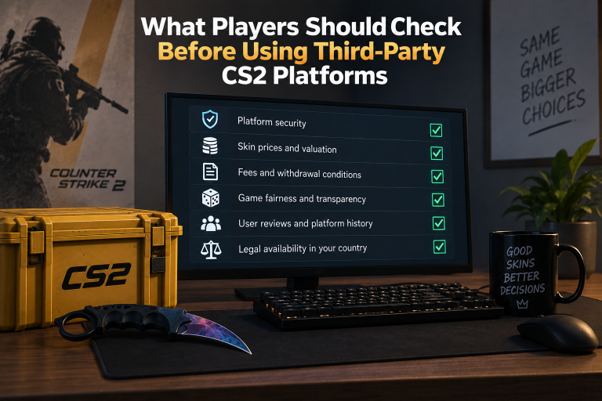
Third-party Counter-Strike 2 platforms cover several services, from skin marketplaces to case-opening and gambling sites. Players searching for gambling sites csgo may find platforms with similar games and item inventories, but the way they handle skins, balances, withdrawals, and user accounts can differ considerably. A professional-looking interface says little about how a service operates. Before depositing a skin or money, players should check the platform’s security, rules, pricing methods, and withdrawal process.
Check How the Platform Handles Steam Accounts
Many CS2 services use Steam for account identification or inventory-related functions. Players should pay close attention to where a login request leads and avoid entering Steam credentials into an unfamiliar page that only imitates the official interface.
Phishing is particularly relevant when valuable skins are involved. A fake trade offer or login page can put an entire inventory at risk. Checking the domain carefully and reviewing trade details before confirming them is more important than how polished the platform looks.
Players should also understand what permissions a service requests. A marketplace that needs access to certain inventory information does not automatically need unrelated account permissions.
Review Every Trade Offer Before Accepting It
Trade offers deserve their own check. If a platform sends or facilitates an offer involving cs go cases, weapon skins, knives, or gloves, compare every item with what the site says you are depositing or withdrawing.
Do not rely only on thumbnails. Similar-looking items can have different exterior conditions, StatTrak status, float values, or market prices. Confirm the Steam account involved in the trade and make sure no unexpected items have been added or removed before accepting.
Understand How Skins Are Valued
A third-party platform’s displayed item value may differ from the Steam Community Market or other marketplaces. That difference is not automatically suspicious because platforms can use different pricing sources, liquidity rules, and fees. Still, users need to know what the number represents.
This is especially important for expensive or less liquid items. A rare skin might have a high listing price but relatively few completed sales. Special patterns and unusual float values can also make automatic valuation difficult.
Before depositing an item, compare its platform value with recent market activity. The same principle applies to the best csgo cases, since case prices can change as supply and opening demand move.
Check Fees and Withdrawal Conditions
A platform can appear competitive until withdrawal rules are considered. Check whether fees apply to deposits, sales, trades, withdrawals, or currency conversion. Minimum withdrawal amounts and item availability can also affect how easily a balance can be removed.
If skins are used for withdrawals, find out whether users choose a specific item or receive alternatives based on available inventory. A displayed balance is less useful if suitable withdrawal items are consistently unavailable.
The rules should be accessible before a user deposits anything. Important conditions hidden behind vague wording are a reason to be cautious.
Verify How Randomized Games Work
Platforms built around csgo gamble formats may offer roulette, case battles, upgrades, crash-style games, or third-party case opening. Randomized games need more scrutiny than a standard marketplace because users are not exchanging items at a fixed agreed price.
Look for clearly stated probabilities and an explanation of how outcomes are generated. Some services use provably fair systems based on cryptographic seeds and hashes. When implemented transparently, these systems can allow users to verify whether a specific result matches the disclosed inputs.
Provably fair does not mean profitable. It verifies a result-generation process, not whether the odds provide good value to the player.
Separate Official and Third-Party Case Opening
A cs case opening performed through Counter-Strike 2 is not the same system as opening a virtual case on an independent website. Valve’s official cases contain defined collections of items, while third-party platforms can create their own pools, probabilities, prices, and reward structures.
This distinction matters when players compare cases cs2 with cases displayed elsewhere. A third-party case that uses familiar skin images is not necessarily connected to an official Counter-Strike 2 container.
Check the listed probabilities and possible outcomes rather than assuming the mechanics match Valve’s system.
Look at Platform History and User Reports
User feedback can reveal problems that are difficult to identify from a site’s interface. Search for reports about withdrawals, locked accounts, unexpected verification requests, pricing disputes, and support response times.
Individual complaints do not prove that a service is unreliable, and positive reviews do not prove the opposite. Look for repeated patterns across independent discussions instead of relying on testimonials published by the platform itself.
Players should also check who operates the service, whether usable terms are available, and whether gambling features are legally accessible in their jurisdiction.
What to Check Before Depositing Anything
Before transferring skins or money, verify the exact domain, account permissions, item valuation method, fees, withdrawal rules, and support information. For randomized games, check the published odds and whether results can be independently verified.
Most importantly, separate different types of risk. A platform can offer reasonable skin prices while having poor withdrawal conditions, or provide verifiable game results while charging significant fees. Checking each part separately gives players a much clearer picture of a third-party CS2 platform before any inventory value is put at risk.